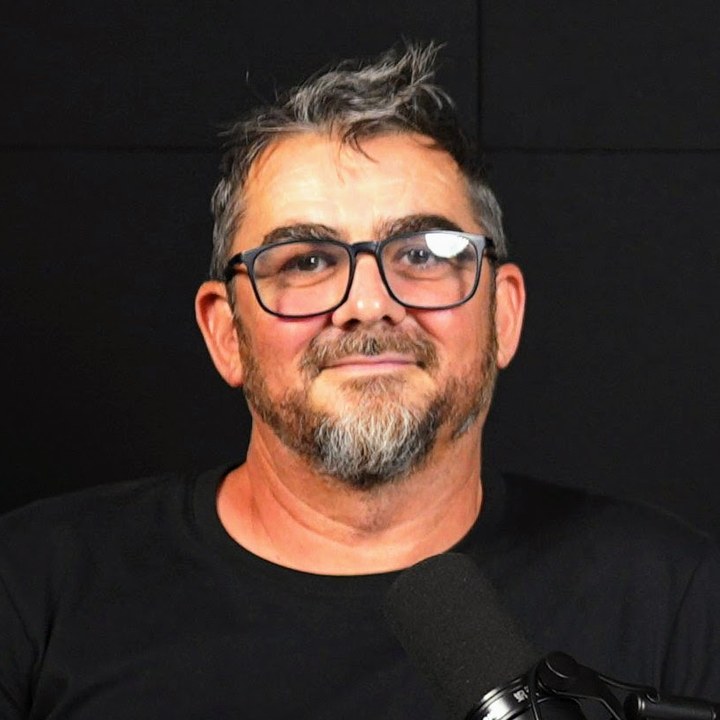
I build AI-First operations for small businesses. That means the systems, the automations, and the knowledge that lets AI work as part of your team rather than as another app you have to remember to open.
Before this I spent my career in IT, first as a systems administrator looking after small businesses, then as an IT manager running infrastructure projects across multiple sites in the UK and Europe.
For years, the automation and integration tools I worked with were enterprise only. Big licences, big projects, big budgets. If you ran a business of ten people you simply could not get near them, and you spent your days doing by hand what larger competitors had automated a decade earlier.
Then that changed. The same functionality became available at a price a small business could actually justify. I started Automation Made Simple to take what I had learned at corporate level and put it to work at the other end of the market, so smaller businesses can compete and grow without hiring an operations department to do it.
Automation on its own was already empowering. It let a small team do considerably more with the same number of people, and it took the repetitive work out of the day.
AI has taken that somewhere else entirely. It is no longer just moving data between systems, it is doing the thinking work that used to sit with a person, and doing it at the pace your business already runs at.
Small companies can move quickly. That agility is the advantage, and AI is where to spend it.
Large organisations are slow to adopt this properly. There are committees, procurement cycles, legacy systems and a long list of people who have to agree before anything changes. A small business has none of that. You can decide on Monday and be running it by Friday.
That is a genuine head start, and it does not stay available forever. The businesses that build AI into how they operate now will have a system that has been learning their business for a year or two by the time everyone else begins.
I think every small business should be taking that opportunity while it is still an advantage rather than a catch-up.
Same decision. Nobody to ask for permission.
I keep the number of clients I work with deliberately low. Building an AI-First business is not something that can be done at arm's length. It takes a real understanding of how a company runs, where the work piles up, who does what, and what good actually looks like to the people doing the job. That only comes from working closely, over time.
It also means this is not set up and walk away. I am still involved with every client I have built for, and the relationship matters as much to me as the build does.
I would rather work properly with a handful of businesses than lightly with fifty. Understanding your business is the job, not the preamble to it.
Launch day is the start, not the finish. Businesses change, and the system has to change with them. Every client I have built for is still a client I speak to.
You should understand what has been built and why. If I cannot explain it without jargon, it is usually a sign I have made it more complicated than it needs to be.
New tools are only interesting when they solve something real. I start with where your time is going, then work out what to build, never the other way round.
One working session to map your business and see whether there is something here worth building. No commitment in advance.
Book a discovery call →